
Aging-in-Place Technology: How Innovation and Empathy Are Redefining Home-Based Healthcare


“We’re not just designing devices—we’re designing dignity.”
That sentiment, shared by Kablooe CEO Fred Sklenar during his MD&M Midwest presentation, perfectly captures the mission behind today’s most impactful healthcare innovations. As populations age and healthcare systems strain, a new frontier is emerging: aging-in-place technology. This movement focuses on empowering older adults to maintain independence, safety, and quality of life within the comfort of their homes—through smart, intuitive, and empathetically designed medical devices.
In this article, we’ll explore the intersection of technology, empathy, and design that’s redefining what it means to age well. Drawing from insights shared in Sklenar’s presentation, we’ll look at the challenges of designing for autonomy, the critical role of usability in adoption, and how companies like Kablooe are helping lead the way in aging-in-place innovation.
The Urgency of Innovation in Aging
The numbers tell a powerful story. By 2030, one in every five Americans will be 65 or older. The “silver tsunami” isn’t on the horizon—it’s already here. And as Sklenar emphasized in his talk, “We can’t build enough hospitals and nursing homes to meet the growing demand. The future of healthcare must extend into the home.”
That’s why in-home healthcare devices and home-based medical technologies are fast becoming the most important segment in medical device innovation. From medication management systems to remote monitoring solutions, the focus is shifting from treatment in facilities to empowerment at home.
But innovation alone isn’t enough. The true challenge lies in creating devices people will actually use—technologies that integrate seamlessly into daily life without adding complexity or stress.
“You can make the smartest device in the world, but if your user can’t—or won’t—use it, it fails,” Sklenar noted.
What Is Aging-in-Place Technology?
Age-in-place technology refers to products and systems designed to help older adults live independently, safely, and comfortably at home. These can include:
- Wearable health monitors that track vitals like heart rate and blood oxygen.
- Medication dispensing systems that ensure accurate dosing and adherence.
- Smart home sensors that detect falls, inactivity, or environmental hazards.
- Communication and telehealth tools that connect users with caregivers and clinicians.
The Human Side of Design: Empathy as a Starting Point
At Kablooe, every innovation begins with a question: What does the user truly need?
When designing medical devices for aging populations, assumptions can be dangerous. For example, while younger users may adapt easily to mobile apps and touchscreens, older adults often face barriers related to dexterity, eyesight, or confidence with technology.
That’s why user empathy is essential to every design process. It’s not about designing for aging users—it’s about designing with them. Through direct user studies, prototype testing, and real-world observation, Kablooe’s human factors experts uncover not just the functional needs but the emotional realities of the people who will rely on these products every day.
This approach doesn’t just improve usability—it builds trust. When users feel understood, they’re more likely to embrace and engage with new technologies, improving health outcomes and adherence.
Design Challenges in Aging-in-Place Technology
Creating in-home healthcare devices comes with unique complexities that traditional clinical products don’t face. Some of the most critical challenges include:
1. Balancing Complexity and Simplicity
Aging users need devices that are powerful enough to deliver accurate data—but simple enough to use without assistance. Overly complex interfaces or multi-step processes can discourage use, especially for individuals managing multiple chronic conditions.
2. Ensuring Reliability in the Home Environment
Unlike hospital equipment, home-based devices operate in uncontrolled settings. They must withstand spills, power interruptions, connectivity issues, and everyday wear and tear—all while maintaining medical-grade reliability.
3. Promoting Adoption Among Skeptical Users
Trust is earned, not assumed. Many older adults are hesitant to rely on digital technologies for health management. Incorporating familiar design elements—such as tactile buttons, clear visual cues, and voice guidance—can help bridge that gap.
4. Building for Emotional Connection
As Sklenar pointed out during his presentation, “Aging-in-place isn’t just about staying home—it’s about staying human.” Designers must consider how products make users feel, not just how they function. Devices that evoke reassurance, confidence, and dignity have a much higher chance of long-term success.
The Power of Co-Design: Collaboration Across Disciplines
Innovation in age-in-place technology doesn’t happen in silos. It requires collaboration between engineers, clinicians, designers, and caregivers—all working together to bridge the gap between medical precision and user experience.
This is where Kablooe’s Design-Driven Development® process comes into play. By integrating human factors research, industrial design, and engineering disciplines from day one, Kablooe ensures that functionality and usability evolve together—not in isolation. This holistic approach is especially vital when designing home-based medical devices that must perform flawlessly in diverse real-world settings.
To learn more about this approach, visit Kablooe’s Design-Driven Development page.
A Vision for Intelligent Aging-in-Place
The future of aging-in-place isn’t just smarter—it’s more compassionate. Imagine a home where sensors detect changes in gait before a fall occurs, medication dispensers provide gentle reminders through familiar voices, and wearable devices track vital signs without ever needing to be charged.
These innovations aren’t science fiction—they’re already emerging. What will set successful companies apart is their ability to align technology with empathy, ensuring solutions empower rather than overwhelm their users.
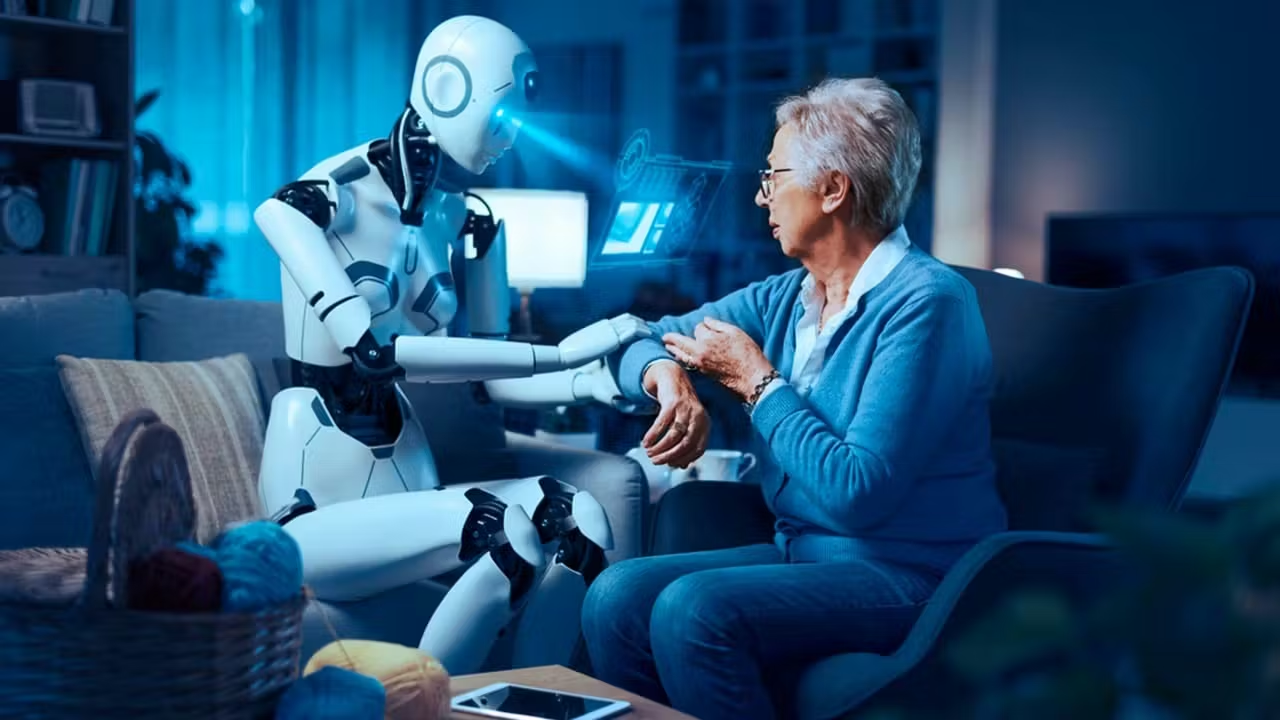
As Sklenar noted, “Innovation isn’t about adding features—it’s about removing friction.” The best devices will fade into the background, supporting health and autonomy effortlessly, so older adults can focus on living, not managing technology.
Build the Future of Home-Based Healthcare with Kablooe
For medical device manufacturers and innovators, the opportunity is enormous—but so is the responsibility. Creating effective aging-in-place solutions requires not only technical excellence but a deep understanding of human behavior, emotional design, and long-term usability.
If you’re ready to collaborate with experienced designers of in-home healthcare devices, Kablooe can help guide your innovation journey—from research to prototype to market-ready product.
Visit our In-Home Medical Device Design page to learn how our team transforms visionary ideas into life-changing solutions. Because when design and empathy meet, intelligent aging-in-place becomes more than a concept—it becomes a movement.
Ready to design with dignity in mind? Contact us today to get started.
