
5 Reasons to Hold Off on Concepting and Ideation in Product Development

When most teams talk about product development, there’s usually one stage that gets everyone’s heart racing: concepting and ideation. It’s definitely the “sexiest” part of the process—the moment when sketches hit the page, prototypes start to take shape, and wild ideas run free.
After all, it feels like real progress when you’re generating solutions and imagining the finished product.
But here’s the catch: Diving into product development concept work too early is one of the most common mistakes teams make. And while it’s tempting to chase the fun stuff right away, skipping the all-important groundwork often leads to bigger problems down the road.
At Kablooe, we know firsthand that product development processes thrive when they start with research, feasibility, and strategy—not just drawings on a whiteboard. In fact, resisting early ideation is often the smartest move you can make.
To that end, let’s break down the top five reasons why you should hold off on concepting until the time is right.
1. Avoid Costly Revisions in Product Development Processes
Imagine this: Your team rushes into sketching concepts before you’ve done your homework. A few weeks later, you realize your design doesn’t align with user needs, regulatory requirements, or manufacturing limitations. Suddenly, you’re back to square one, redesigning from scratch.
That’s the risk of jumping the gun with concept development for new product initiatives. Each premature sketch or prototype can actually create more rework, eating up valuable time and resources. Instead of moving forward, you’re stuck in an endless loop of revisions.
By slowing down and focusing on foundational steps like product evaluation, you’ll uncover critical insights before pen ever hits paper. This ensures that once ideation begins, your concepts are grounded in reality—and much less likely to need a do-over.
2. Keep Your Budget in Check
Designing flashy concepts feels productive, but it can also be a real budget-buster. When you commit resources to early ideation without validating the basics, you risk blowing funds on designs that never make it to market.
Here’s the truth: The earlier you start creating polished visuals or prototypes, the more expensive your mistakes become. Course corrections in the early research phase are relatively cheap, but redesigning fully formed ideas is costly and time-consuming.
Smart teams hold off on the “fun” stage of ideation for new product development until after they’ve locked down research, risk assessments, and compliance needs. This approach keeps costs predictable and minimizes the financial chaos of constant design resets.
3. Don’t Let Early Ideation for New Product Development Mislead You
Every designer has experienced it: falling head over heels for an early concept. Maybe it looks amazing. Maybe it feels innovative. Maybe it even gets applause in your brainstorming session. But if you latch onto an idea too soon, it can blind you to the reality that it doesn’t actually work in practice.
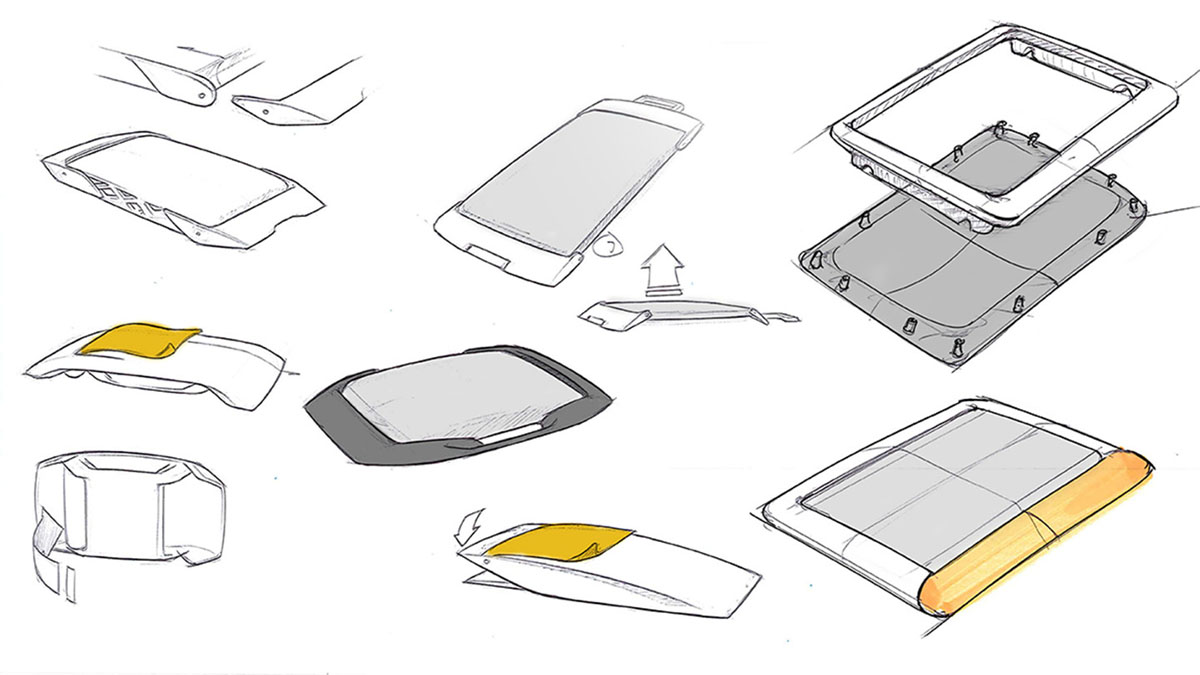
Early sketching does have a purpose—but it’s not to pick a winner. The goal of early concepting is to evaluate many ideas quickly and explore a wide range of possibilities before committing resources to any single direction. When sketches become emotional anchors instead of tools for discovery, teams risk mistaking excitement for validation.
Take it from us: Early sketches and models have a way of taking on a life of their own. Many teams become emotionally invested, even when evidence starts piling up that the concept is unfeasible or unviable—for whatever reason. By delaying ideation, you reduce the chances of attachment clouding your judgment.
At Kablooe, our trademarked Design-Driven Development® (D³) approach ensures concepts emerge from data, not just gut feelings. That way, when it’s finally time to fall in love, it’s with an idea that’s already squarely set up for success.
4. Minimize Risk of Intellectual Property (IP) Issues
Rushing into concepting can also land you in hot water with intellectual property lawyers. Without thorough research and due diligence, it’s surprisingly easy to create something that overlaps with existing patents or design protections.
The result? Costly legal challenges, wasted design effort, and potential delays in bringing your product to market.
By waiting until you’ve explored the competitive landscape and documented what’s already out there, you can confidently generate concepts that stand on solid IP ground. This proactive step not only protects your investment but also paves the way for a smoother path to commercialization.
5. Lay a Strong Foundation for Success
At the end of the day, concepting is only as strong as the foundation beneath it. Skipping research, usability studies, and feasibility checks is like building a house without first pouring the concrete foundation. Sure, the design might look beautiful on paper—but it won’t stand the test of reality.
By holding off on ideation until after you’ve done the groundwork, you’re setting your team up for success. This means taking time for:
- User research: Understanding the real problems you’re solving.
- Feasibility modeling: Identifying manufacturing, engineering, and regulatory constraints.
- Market validation: Ensuring the opportunity is worth pursuing.
Once these pieces are in place, your ideation efforts will be far more impactful. You’ll generate solutions that are not only creative but also viable, scalable, and aligned with user needs.
Want proof? Check out our design portfolio, where the product concepts don’t just look good—they work as intended, because they were built on a solid foundation.
Ready to Do Concepting the Right Way?
Don’t worry, the product development concept and ideation phase isn’t going anywhere. You’ll still get to brainstorm, sketch, and prototype—it’ll just be at the right time, with the right information, and with much higher odds of success. So the next time your team feels the itch to dive into ideation on day one, be sure to pump the brakes.
Ask yourself: Have we done the groundwork? Do we fully understand the problem? Have we validated our assumptions? If the answer is no, then waiting is the smartest decision you can make. Because in product development, patience isn’t just a virtue—it’s a strategy for success.
If you’re eager to bring your next product to life without falling into the trap of premature ideation, Kablooe can help. Our proven D³ Process® ensures your ideas are grounded in research, feasibility, and strategy—so that when concepting happens, it really counts.
Don’t let early ideation derail your next launch. Contact us today to build stronger concepts, reduce risk, and speed up your path to market.