
Keep It Cool: Thermal Management Strategies for High-Performance Devices
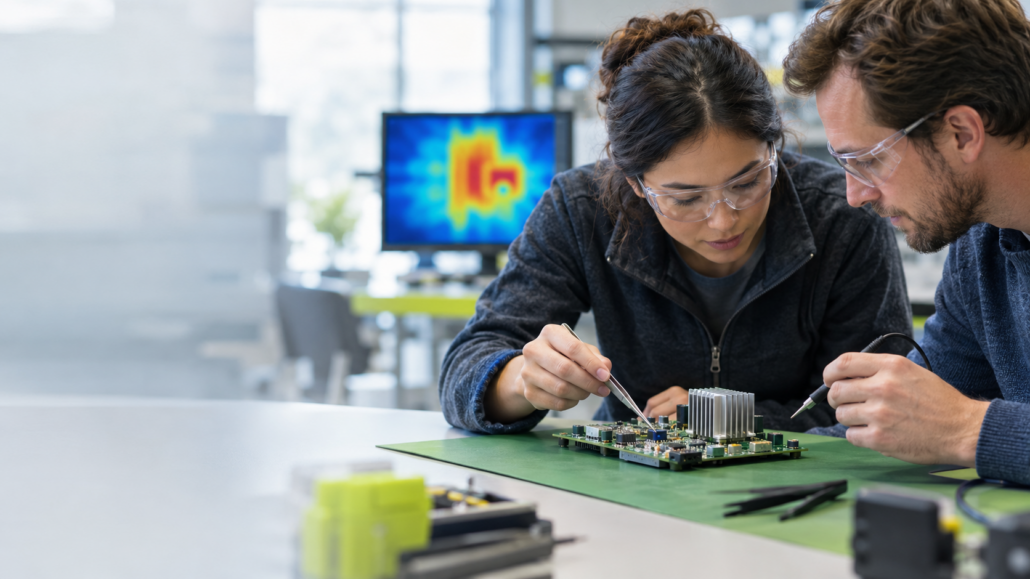
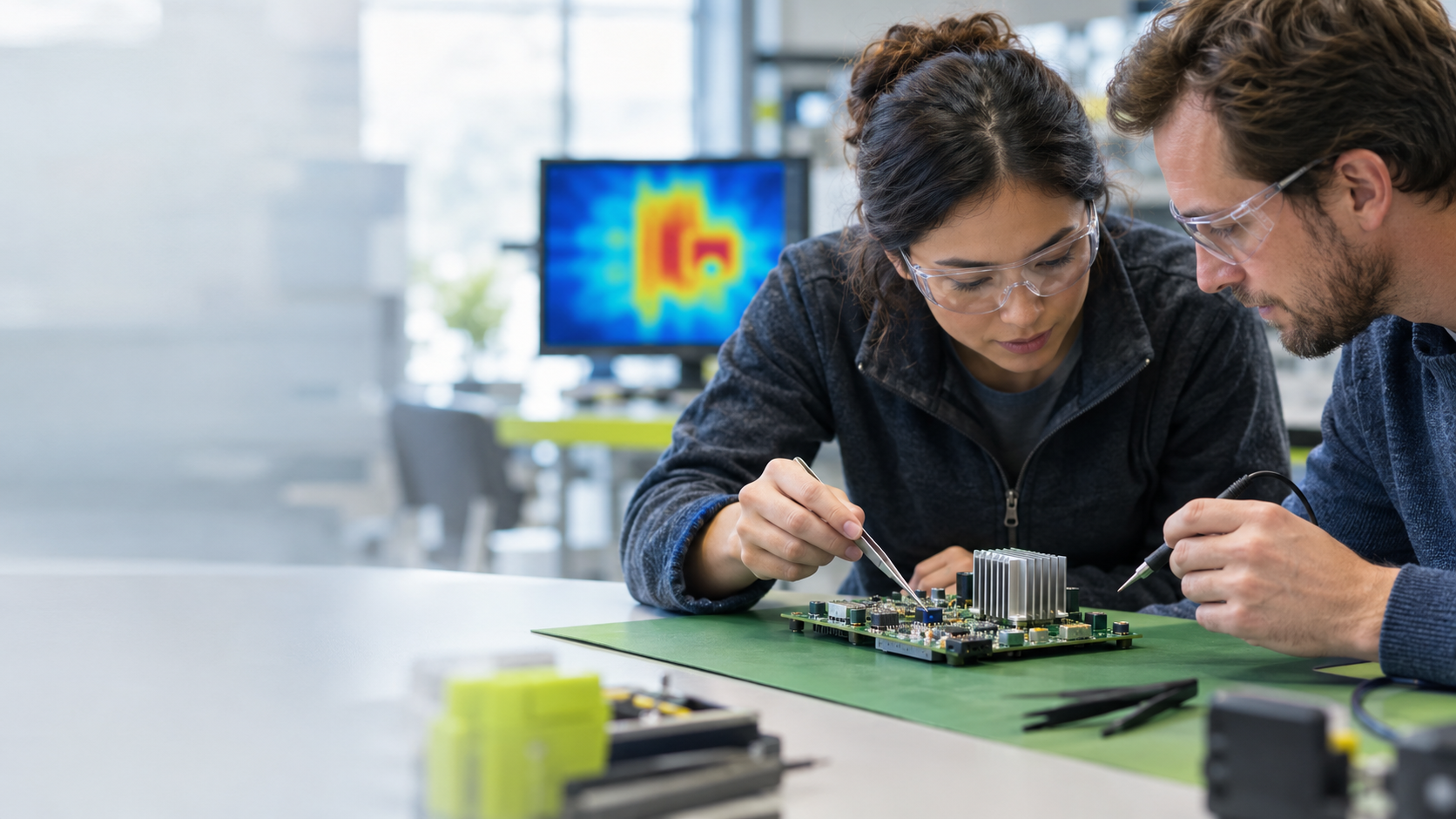
Ever had a phone get so hot you had to set it down? Or a laptop that turned your lap into a heating pad? It’s annoying, and an overheated device usually slows itself down to cope.
Now picture that same heat building inside an infusion pump, a wearable monitor, or a handheld diagnostic tool. Heat can degrade performance, shorten component life, throw off sensor accuracy, and put users at risk.
That’s why a thermal management strategy belongs at the start of a design process, rather than the end as a patch.
Why Heat Is the Silent Performance Killer
Every powered device makes heat. Processors, batteries, motors, and power electronics all turn some energy into warmth, and in a compact, sealed medical device, that heat has few places to go. Left unmanaged, it can cause:
- Throttled performance as the device slows itself down to avoid overheating
- Shorter component and battery life
- Sensor drift and inaccurate readings
- Surfaces that are uncomfortable or unsafe to touch
Medical devices add another layer. Standards like IEC 60601-1 limit how hot surfaces can get when they touch patients or users, so thermal design is a compliance issue as well as a performance one.
Start by Making Less Heat
The coolest heat is the heat you never generate. Before reaching for heat sinks or fans, look at the source. With efficient power design, smart component selection, and firmware that powers down unused features, you can reduce the load your cooling has to handle. That takes hardware and software teams working together, which is why embedded engineering and thermal planning go hand in hand.
Thermal Management Solutions: Passive vs. Active Cooling
After you’ve reduced heat at the source, you need a way to move the rest out of the device.
Passive Cooling: Quiet and reliable
Passive cooling has no moving parts, which helps medical devices remain silent, sealed, and dependable. Heat sinks, heat spreaders, thermal pads, copper layers in the circuit board, and enclosures that spread heat across their surface all work without creating additional noise or drawing additional power. The limit is capacity: When a lot of heat is packed into a small space, passive cooling may not be able to keep up by itself.
Active Cooling: Calling in Reinforcements
Active cooling uses fans, blowers, liquid loops, or thermoelectric coolers to push heat out faster. It handles larger heat loads, but the trade-offs matter in healthcare settings: added noise, higher power draw, more parts that can fail, and vents that complicate cleaning, disinfection, and fluid protection. That’s why teams usually push for passive solutions before adding active cooling.
Material Innovations That Move Heat Where You Want It
Materials do a lot of the heavy lifting. Thermally conductive plastics let a housing share the cooling load. Graphite sheets spread heat quickly across thin profiles. Phase change materials absorb heat as they melt, smoothing out spikes during bursts of high use. Thermal interface materials fill the tiny gaps between components and heat sinks so heat doesn’t get trapped. The right solution will depend on the nature of your device, but the principle is the same: Give heat an easy path to leave.
Design Considerations for Heat Dissipation
Good thermal design is a series of small decisions that add up. Ask early:
- Where do heat-generating components sit, and how close are they to sensitive ones?
- What path does heat take from the component to the outside of the device?
- Which surfaces will people touch, and for how long?
- Where will the device be used: a cool operating room, a warm home, or on the body?
Heat also changes how a device feels to use. A handheld tool that gets uncomfortably warm mid-procedure will frustrate clinicians no matter how well it performs, which is where thermal design and human factors meet.
When Space Is Tight: Wearables and Implantables
Wearables sit tight against skin, so surface temperature and comfort come first. Thermal management for implantable devices is stricter still. There are no fans or vents, and the surrounding tissue tolerates only a small rise in temperature. In these cases, the best strategy is usually a design efficient enough to produce very little heat at all.
Curious about how early engineering decisions play out in real projects? See our case studies.
Test Early, Test Realistically
Thermal problems are far cheaper to catch on a bench than in a validation study. Thermal modeling can uncover hot spots before a design is built; early prototypes can be measured under realistic conditions like sustained use, warm rooms, and worst-case workloads. Building these checks into early feasibility modeling gives teams the opportunity to solve thermal risks while changes are still easy.
Keep Your Cool from Day One
Heat won’t announce itself until a device is already in trouble. The teams that avoid thermal surprises treat heat as a design requirement from the beginning, alongside usability, safety, and manufacturability. At Kablooe, our mechanical, electrical, and software engineers work together under a single roof. That way, thermal decisions get made with the whole device in mind.
Are you working on a device that runs hot, or one that’s about to? Let’s talk.
Frequently Asked Questions
What is thermal management in medical devices?
Thermal management is the practice of controlling heat inside a device so it performs reliably, lasts longer, and stays safe to touch. It covers everything from reducing heat at the source to moving it away with cooling solutions.
What is the difference between passive and active cooling?
Passive cooling moves heat without moving parts, using elements like heat sinks and thermal pads. Active cooling uses components like fans or liquid loops to push heat out faster, usually at the cost of added noise, power draw, and complexity.